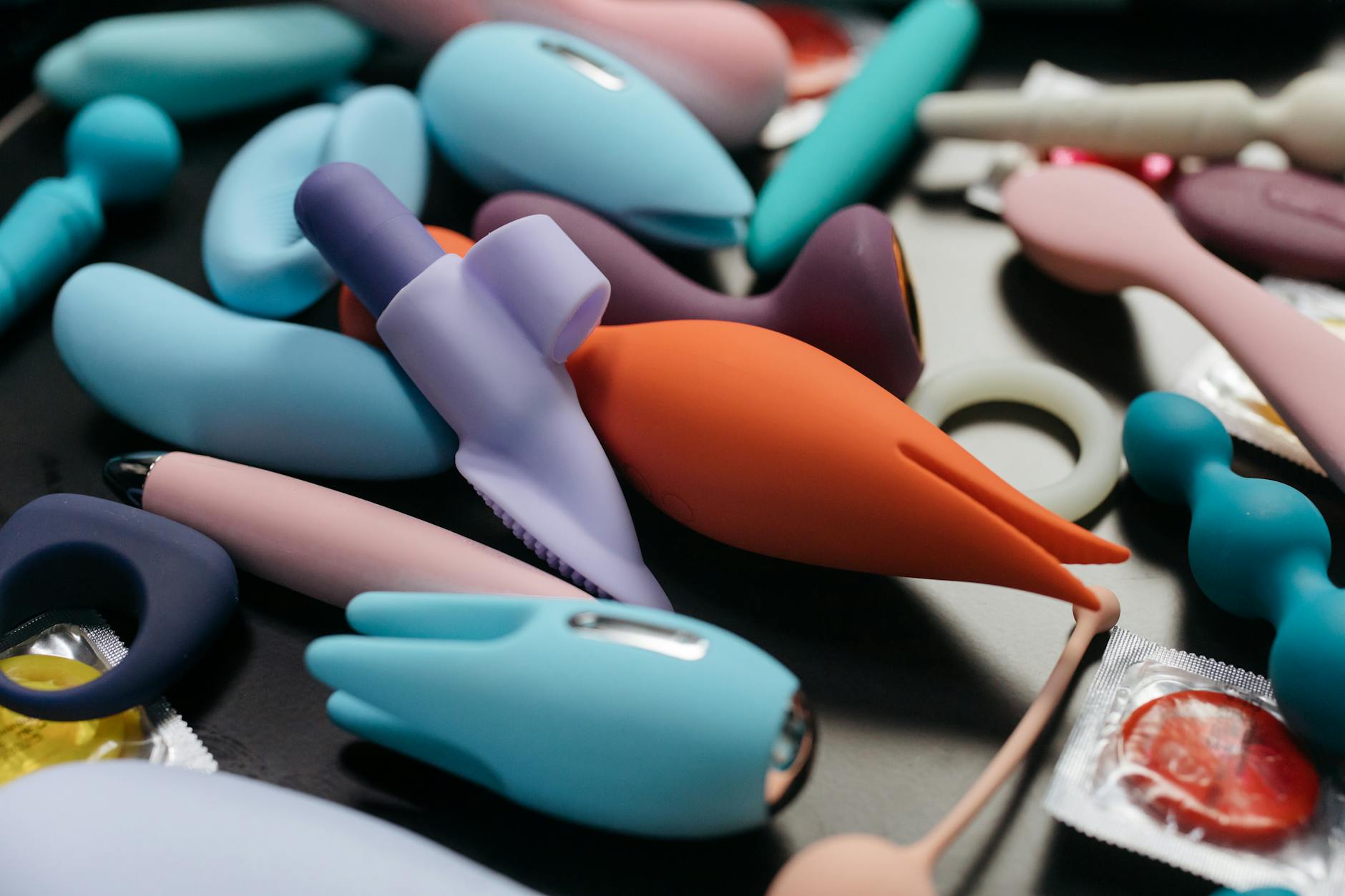
The flirty phase is a tightrope between two wants
You're texting constantly. You're canceling plans to see them. You're thinking about them when you're supposed to be working. And then sex enters the picture. Suddenly you're acutely aware of every sound you make, every angle of your body, whether you're taking too long to come, whether they're getting bored. The very thing that should feel good becomes another performance to nail.
Here's what I've seen in my practice over and over: people in the first weeks of dating become hyperaware of their partner's pleasure and their own ability to deliver it. The irony is that this hyper-focus actually kills arousal. You can't relax into sensation when you're running a mental checklist of whether this is hot enough, quick enough, impressive enough.
That's where a lemon vibrator changes the game.
Why the early stage makes you second-guess your own body
The flirty phase has particular neurochemistry attached to it. You're flooded with dopamine and norepinephrine. You're hyper-alert. Your threat-detection system is on high. This is biologically useful for bonding, but it's terrible for relaxation. Your nervous system is literally not in a parasympathetic state where deep pleasure happens.
Add in the fact that you don't yet know this person's body language around sex. Do they prefer banter or silence? Are they checking in with you or are they in their own flow? This ambiguity creates a low-level anxiety that sits just under the surface of arousal. You want to come, but part of your brain is still gathering data about whether it's safe to let go.
For people with vulvas, this is especially true because clitoral arousal depends on nervous system settlement. You can't think your way into an orgasm when you're simultaneously trying to read your new partner's facial expression.
A lemon vibrator gives you permission to focus on yourself first
This is not selfish. This is the opposite of selfish. When you use a lemon clitoral vibrator during early dating, you're essentially telling your nervous system: "My pleasure is worth attending to. I don't need to earn it by being impressive. I can focus on sensation rather than performance."
That shift in your brain changes everything. You start to breathe. You start to actually feel texture and pressure instead of tracking whether you're taking too long. You become present.
And here's what I've noticed with couples: the partner who's watching often becomes more relaxed too. They're not waiting anxiously to see if you're close. They're not wondering if they should be doing something different. They can just be there, present, without the pressure of being your sole source of pleasure. That's actually when real intimacy happens.
How to introduce it without making it weird
Be direct. Not clinical, just honest. Try something like: "I want to use my vibrator during sex. It helps me stay present with you instead of in my head worrying about whether I'm taking too long."
Most partners appreciate this because it removes the guessing game. You're not rejecting them. You're actually inviting them deeper into your experience.
If you're still in the "clothes on, making out" phase, you can test the waters even earlier. Use it solo while they're there. The permission you give yourself to feel good often makes them feel invited into your pleasure rather than excluded from it. Confidence is the actual turn-on here.
Practical setup for early-dating sex
Three things change when you're new to someone:
Lubrication matters more. Your body might not be as wet as it is with a long-term partner because you're still in the anxiety loop. Water-based lubricant on the lemon vibrator helps you skip the friction that can make you tense up.
Start with lower intensity. Early anxiety can make your clitoris feel oversensitive or numb depending on the day. Begin with pattern one or two on your lemon clitoral vibrator. You can always turn it up. You can't undo startling yourself.
Time it for when they've already stimulated you. Don't go straight to the vibrator. Let them touch you for 10-15 minutes first. Then introduce the vibrator. This signals that they're part of the buildup, not that they're being replaced. The psychology of sequencing matters as much as the mechanics.
What happens to your body when you relax into pleasure
Once your nervous system knows it's safe, several things shift. Your pelvic floor stops gripping. Your vaginal walls relax. Your ability to feel sensation actually increases. Blood flows where it needs to go. Your clitoris becomes responsive rather than defensive.
Sex starts to feel good instead of like work. And your partner feels the difference immediately. You're not performing. You're present. You're making eye contact. You're moving with them instead of to them. That presence is what they actually want, not your ability to look like you're having an orgasm.
The emotional piece: staying connected while you're focused on yourself
Some people worry that using a vibrator means withdrawing from their partner. It's actually the opposite. I recommend staying connected: eye contact, hand-holding, communication. Keep narrating your experience in simple language. "That feels good." "I'm close." "I like when you..."
This keeps the lemon vibrator from becoming a solo experience in a partnered moment. It's collaborative rather than isolating. You're including them in your pleasure rather than disappearing into it.
Why the flirty phase is actually the best time to establish this habit
If you wait until you've been with someone for a year to introduce a vibrator, there's more accumulated pressure around it. Introducing it early signals that pleasure, efficiency, and mutual care are all priorities from the beginning. You're not bringing it in as a fix for a problem. You're bringing it in as a tool for staying present.
People who use lemon vibrators early in relationships tend to have better sex long-term because they've never pretended to be able to orgasm on command. They've built a foundation where communication about pleasure is normal from day one.
FAQ
How do I know if my new partner will be okay with a lemon vibrator during sex?
Most people are fine with it if you frame it correctly. You're not rejecting them. You're actually inviting them into a better experience because you'll be more present. The partners who have a problem with vibrators are often anxious about their own adequacy. That's their work to do, not yours. You deserve tools that help you feel good.
Can I use a lemon sucker vibrator if I'm still figuring out what feels good?
Absolutely. The early dating phase is perfect for exploration. The suction sensation of a lemon vibrator actually helps you learn your own body's responses because suction is gentler than traditional vibration for people still calibrating their sensitivity. You're not fighting to feel something. You're discovering what naturally happens.
What if they want to use the vibrator on me instead?
That's a conversation worth having. You might try it and see how it feels. Some people find it sexy to have a partner control the vibrator. Others find it takes them out of their own pleasure. There's no rule. Communicate what works for you. "I like controlling it because I can focus better" is a completely valid answer.
Is it normal to need a vibrator to orgasm during sex when you didn't before?
Yes. New relationship anxiety is real. Some people's bodies simply don't orgasm from penetration or from partnered touch when they're still in the hyper-alert phase. A lemon clitoral vibrator isn't a sign that something is wrong with you or with the sex. It's a tool for bridging the gap between nervous system activation and actual relaxation.
How do I know if I'm using the vibrator to avoid intimacy or to enable it?
Honest check-in: Are you more present with them when you use it? Are you making eye contact? Are you communicating? If yes, it's enabling intimacy. If you're disappearing into the vibrator and avoiding connection, that's worth examining. But most of the time, the vibrator creates space for better connection, not less.
Can I use a lemon vibrator with a condom?
Yes, absolutely. Water-based lubricant on the vibrator helps it work smoothly even with condoms. If you're using a silicone toy, avoid silicone lube because it can degrade the material. Stick to water-based for both toy safety and condom compatibility.
The bottom line
The flirty phase doesn't have to be a performance. When you use a lemon vibrator, you're essentially saying to yourself and to your partner: "I'm confident enough to stay in my own body. I trust you to be present while I do." That confidence is contagious. It makes them more relaxed too. And that's when sex actually becomes what it should be: mutual presence instead of mutual anxiety.
Your pleasure is worth prioritizing from day one. A lemon clitoral vibrator isn't a workaround. It's an actual facilitator of the connection you're trying to build. Use it without apology.